
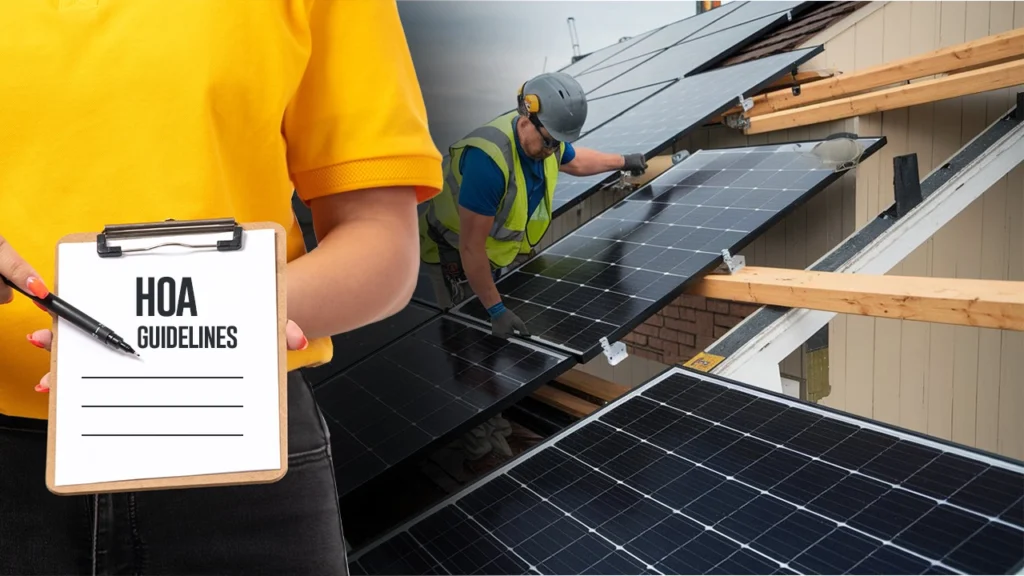
Solar energy is growing rapidly across Hawaii, and for good reason. With year-round sunshine and high electricity costs, installing solar panels can help homeowners save money while reducing their environmental impact. It’s a smart, long-term investment that fits perfectly with the islands’ clean energy goals.
However, if you live in a community managed by a Homeowners Association (HOA), there may be specific guidelines that affect your solar installation. Understanding these rules in advance can help you avoid delays, prevent conflicts, and ensure a smooth and stress-free approval process.
Take the first step toward energy independence—reach out to Blue Energy Sky Hawaii today for a free business consultation and see how much you can save.
What Are HOA Rules and Regulations for Solar Installation?
HOA rules for solar installation are guidelines set by your Homeowners Association that govern how, where, and sometimes when you can install solar panels on your property. These rules are typically found in a document called the CC&Rs — short for Covenants, Conditions, and Restrictions, which is the rulebook every homeowner in the community agrees to follow when they purchase their home.
In Hawaii, HOA rules around solar are limited by state law. Under Hawaii Revised Statutes §196-7, any HOA rule that outright prohibits solar panel installation — or makes it unreasonably difficult or expensive- is legally void and unenforceable. This means your HOA cannot simply say “no solar panels allowed” and leave it at that. What they can do is create reasonable guidelines around the appearance and placement of your system, as long as those guidelines don’t reduce your system’s energy output by more than 10% or increase your total installation cost by more than 10%.
So, in short, HOA rules for solar in Hawaii exist, and they do carry weight, but they cannot take away your fundamental right to go solar. Knowing where that line sits gives you a real advantage going into the approval process.
Common HOA Guidelines for Solar Panels
Every HOA is a little different, but across Hawaii, there are several guidelines that come up again and again. Here’s a detailed look at the most common ones and what they actually mean for you as a homeowner.
Panel Placement and Roof Location
One of the most frequently cited guidelines is where on your roof the panels can be placed. Many HOAs prefer or require that panels face the rear of the home or a less visible side, rather than directly toward the street. The idea is to preserve the neighborhood’s visual character. This is generally a reasonable request, and in many cases, your solar installer can work with this without significantly affecting your system’s performance. However, if rear-facing placement would cut your energy production by more than 10%, the restriction becomes unenforceable under state law.
Flush Mounting Requirements
Some associations require that solar panels be flush-mounted directly against the roofline, rather than installed on raised racks or tilted frames. Flush mounting gives a cleaner, lower-profile look that blends more naturally with the roofline. For most standard residential solar installations, flush mounting is already the default, so this guideline rarely poses a major obstacle. If you’re considering a ground-mounted system or a raised tilt configuration, expect more scrutiny from the HOA.
Color and Appearance Standards
A few HOAs in Hawaii have guidelines around the color of solar panels or the visibility of wiring and conduit on the exterior of the home. Panels should generally be dark-colored and uniform in appearance. Exposed wiring running down the side of a house, or mismatched equipment, can trigger a request for corrections. Working with a professional installer who pays attention to the job’s clean finish helps avoid this issue entirely.
Pre-Installation Approval
Most HOAs require homeowners to submit an application and receive written approval before breaking ground on a solar installation. This typically involves submitting a design plan, equipment specifications, and sometimes a rendering that shows what the finished system will look like from the street. This is not optional; starting installation before receiving approval can result in fines or even a demand to remove the system.
Maintenance and Upkeep
Some HOA governing documents include language about keeping solar panels clean and in good working order. Cracked, dirty, or visibly damaged panels can sometimes be flagged as a violation of community standards. This is generally easy to comply with, as quality solar systems require very little maintenance, and professional installers offer service plans that keep everything in good shape.
Equipment Storage and Inverter Placement
Inverters, disconnect boxes, and other electrical components that sit outside the home may also fall under HOA review. Guidelines often require that these be placed in less visible locations on a side wall rather than the front of the house, for example, or that they be screened with landscaping or a small enclosure if they’re highly visible from common areas.
Why HOA Restrictions on Solar Panels Exist
It helps to understand where HOA solar guidelines are actually coming from. HOA boards aren’t trying to stop residents from saving money or living sustainably — for the most part, they’re trying to balance individual rights with the look and feel of the entire community. Here are the main reasons these restrictions exist.
Protecting Property Values and Curb Appeal
HOAs are fundamentally concerned with maintaining or increasing property values across the community. A well-kept neighborhood with consistent aesthetics tends to attract buyers and support home prices. Some board members worry that visible rooftop equipment, even solar panels, could disrupt the visual harmony that helps the community hold its value. This concern has become less prominent over time as solar installations have grown more common and widely accepted, but it still drives many HOA guidelines.
Maintaining Consistent Neighborhood Aesthetics
Beyond pure property values, many HOAs have a genuine commitment to the look of the community. Planned developments, gated communities, and newer subdivisions in Hawaii are often designed with a specific architectural character in mind. HOA boards see it as their responsibility to protect that character by reviewing any changes to the exterior of homes, and solar panels count as an exterior change.
Managing Structural and Safety Concerns
Some HOA boards express concerns about whether solar installations could cause roof damage, create fire hazards, or affect shared structural elements, particularly in townhomes or planned unit developments where homes share walls or common roofing. While a properly permitted and installed solar system poses no unusual risk, these concerns can lead to requirements for additional documentation, such as a structural engineering report or a copy of the contractor’s license and insurance.
Responding to Past Problems
In some cases, HOA restrictions tightened after a specific incident, such as a poorly installed system that leaked, panels installed without permits, or equipment that fell into disrepair. Even if those incidents have nothing to do with you, the board may have tightened its review process in response. Understanding this history, if it exists in your community, can help you approach the approval process with the right level of detail and professionalism.
Lack of Familiarity With the Law
Honestly, one of the most common reasons HOA boards create overly strict solar restrictions is simply that they’re not aware of Hawaii Revised Statutes §196-7. Many HOA boards are made up of well-meaning volunteers, not legal experts. When a homeowner comes in prepared, knowing their rights, citing the relevant law, and presenting a clean application, the process tends to go much more smoothly.
What to Do When HOA Guidelines Restrict Solar Panels
If your HOA pushes back on your solar application or responds with conditions that feel unreasonable, the first thing to do is take a breath and respond in writing. Request a detailed written explanation of the denial or the specific conditions being imposed. Once you have that in hand, compare their reasoning carefully against Hawaii Revised Statutes §196-7. In many cases, simply referencing the state law in your reply is enough to move the conversation in a more productive direction.
If the back-and-forth continues and you’re not making progress, you have several options available to you. The Hawaii Department of Commerce and Consumer Affairs (DCCA) handles HOA-related disputes and can provide guidance or mediation. A real estate attorney in Hawaii who has experience with HOA law can review your situation and help you push back with the right legal weight behind you. The key thing is not to give up or assume the HOA has final say in Hawaii; the law is firmly on the side of the homeowner when it comes to solar. Most disputes that are handled professionally, calmly, and with proper documentation resolve in the homeowner’s favor without ever reaching a courtroom.
Getting Solar Panels Approved by Your HOA: Step-by-Step
Getting HOA approval for solar in Hawaii is a process, but it’s a manageable one when you know what to expect. Think of this as your roadmap, from first research to the moment your panels go up.
Step 1: Read Your CC&Rs
Start by pulling up your community’s CC&Rs and any Architectural Guidelines your HOA has on file. Look for any section related to solar panels, renewable energy, rooftop equipment, or exterior modifications. This tells you exactly what the board will be looking for and whether there’s a formal application form you’ll need to complete.
Step 2: Choose a Licensed Local Solar Installer
This step matters more than most homeowners realize. A local installer who is familiar with Hawaii’s neighborhoods, HOA review processes, and county permitting requirements will prepare your application package far more effectively than an out-of-state company. Navigating Big Island solar permits, Oahu’s Department of Planning and Permitting, or Maui County’s approval steps all require local knowledge, and a homeowner’s guide is only as good as the professional walking alongside you through it. Make sure your installer is licensed in Hawaii and carries the proper insurance.
Step 3: Get a Professional System Design
Work with your installer to create a formal design plan that includes a roof layout diagram, panel specifications, equipment details, and a rendering or photograph showing what the finished system will look like. The more professional and complete this package is, the faster the HOA review tends to go.
Step 4: Submit Your Application
Submit your full application package to the HOA’s Architectural Review Committee (ARC) or board. Include a cover letter that references Hawaii Revised Statutes §196-7, states clearly that you’re exercising your legal right to install a solar energy system, and invites the board to reach out with any questions. Keep a copy of everything and send it in a way that gives you a delivery record, email with read receipt, or certified mail; both work well.
Step 5: Follow Up
If you don’t receive a response within 30 days, follow up in writing. Many HOA governing documents specify a review window of 45 to 60 days, after which approval may be considered granted by default. Know your timeline and track it carefully.
Step 6: Review Any Conditions
If the HOA approves your project with conditions, read them carefully. Are they reasonable, like a minor adjustment to panel placement? Or do they materially affect your system’s performance or cost? Accept conditions that make sense and push back in writing on those that don’t, citing the state law.
Step 7: Apply for County Permits
Once you have HOA approval in hand, your installer will apply for the required county building permit and utility interconnection. This step is handled largely by your installer, but you should know that each county in Hawaii, Honolulu, Maui, Hawaii County, and Kauai has its own process and timeline.
Step 8: Install and Inspect
After permits are issued, installation happens quickly, typically one to three days for a standard residential system. A final inspection from the county and an interconnection sign-off from your utility (usually HECO or KIUC on Kauai) are the last steps before your system is live.
Benefits of Working with a Local Solar Company
Working with a Hawaii-based solar company offers important advantages, especially when navigating HOA approvals and local regulations. A team that understands the unique requirements of island communities can help streamline the process and prevent common setbacks. Key benefits include:
- Knowledge of local HOA rules and permitting requirements – Local experts are familiar with community-specific guidelines and county regulations, helping ensure your project aligns with both HOA and government standards.
- Preparation of HOA-friendly solar plans – Experienced installers can design systems with proper panel placement, low-profile mounting, and complete documentation to improve approval chances.
- Faster approvals and accurate installations – Familiarity with the review process often leads to quicker approvals and efficient, code-compliant installations.
- Guidance on state incentives and utility programs – A local company can help you understand available tax credits, rebates, and utility options to maximize your savings.
By working with a trusted provider like Blue Sky Energy Hawaii, you gain professional support from planning to final installation. A knowledgeable local installer can simplify the entire process and help you avoid unnecessary delays while ensuring your system is installed safely and efficiently.
Frequently Asked Questions (FAQs)
1. Do I need HOA approval before installing solar panels in Hawaii?
Yes, in most communities, you must receive approval from your HOA before installing solar panels. Many associations require homeowners to submit architectural plans, panel layouts, and equipment details for review. Always obtain written approval before starting installation to avoid fines or delays.
2. Can my HOA completely deny my solar installation?
In most cases, no. Hawaii’s Solar Rights Law (Hawaii Revised Statutes § 196-7) prevents HOAs from placing unreasonable restrictions or outright bans on solar energy systems. However, they can enforce reasonable guidelines related to placement, design, and safety.
3. What documents are typically required for HOA solar approval?
HOAs usually request detailed system plans, including roof layout, panel placement, mounting details, wiring diagrams, and installer credentials. Providing complete and professionally prepared documentation can help speed up the approval process.
4. How long does the HOA approval process take?
Most HOA review processes take between 30 and 60 days. Some HOAs respond within a few weeks, while others may take longer, depending on their review schedule. Submitting accurate, complete documents and working with an experienced installer can help reduce delays.
5. Are there restrictions on where solar panels can be placed?
Yes, many HOAs have placement and visibility guidelines. These may limit panel height, require low-profile designs, or regulate visibility from streets and neighboring homes. However, restrictions must still comply with Hawaii’s solar access laws.
6. What happens if my HOA denies my solar application?
If your application is denied, review the reasons carefully. You may be able to adjust the design, appeal the decision, or request mediation. Understanding your legal rights and working with professionals familiar with HOA compliance can often resolve issues successfully.
7. Do I have to use a licensed solar installer?
Most HOAs require installation by licensed and insured professionals. Hiring a qualified local installer ensures compliance with building codes, safety standards, and HOA guidelines while reducing the risk of future complications.
8. How can I make the HOA approval process smoother?
Start by reviewing your CC&Rs, gathering complete documentation from your installer, and maintaining open communication with your HOA. Partnering with an experienced local company can significantly simplify the process and improve approval chances.
Final Thoughts
HOA guidelines may seem intimidating, but with proper planning, documentation, and professional support, installing solar in Hawaii is entirely manageable. By understanding both HOA rules and state solar rights laws, you can enjoy the financial and environmental benefits of solar energy while maintaining your community’s aesthetic standards.
Thinking about going solar in Hawaii? At Blue Sky Hawaii, we specialize in HOA-friendly solar installations across the islands. From preparing your HOA submission to professional installation and ongoing support, our team makes the process smooth and hassle-free. Contact us today to start powering your home with clean, affordable solar energy!


Recent Comments