
When installing solar panels in Hawaii, one of the most critical decisions you’ll make is understanding the right inverter system. With Hawaii’s abundant sunshine and high electricity costs averaging over 30 cents per kilowatt-hour, making the right choice between microinverters and string inverters can significantly impact your system’s performance and your long-term savings. Hawaii’s unique climate conditions, including occasional tropical storms, high humidity, and salt air in coastal areas, make this decision even more important.
Whether you’re a homeowner in Honolulu, Maui, Kauai, or the Big Island, understanding the differences between these two inverter technologies will help you maximize your solar investment and energy independence.
Ready to go solar? Contact BlueSky Hawaii for a free consultation!
Understanding Microinverters
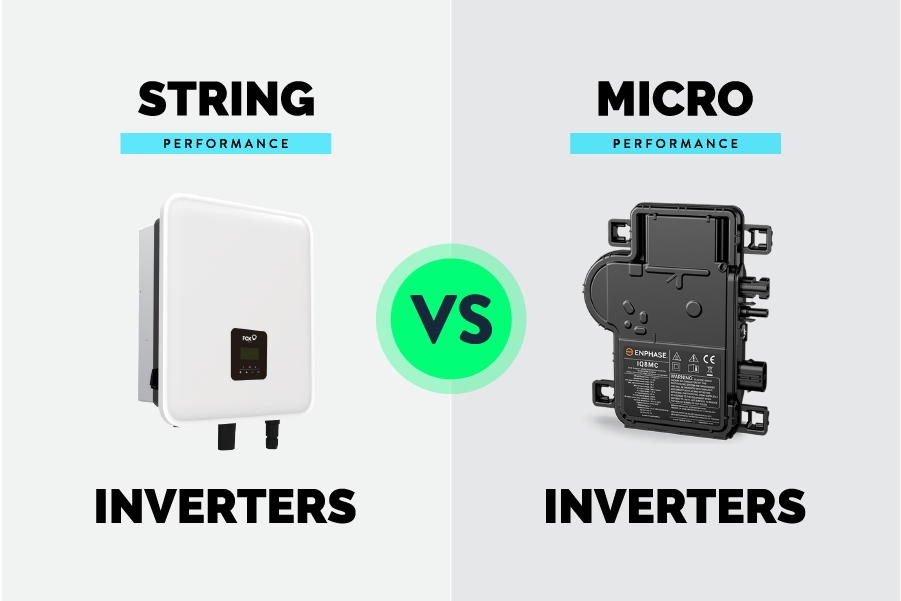
Microinverters represent a modern approach to solar energy conversion, where each solar panel is equipped with its own dedicated inverter unit. This decentralized system has gained much popularity in Hawaii’s residential solar market due to its flexibility and performance advantages. Unlike traditional systems that rely on a single central inverter, microinverters create a modular architecture where each panel operates independently, optimizing energy production across your entire array.
How Microinverters Work:
Microinverters are small, compact units typically mounted directly on the racking system beneath each solar panel. Each microinverter converts DC electricity to AC electricity right at the panel level, before the electricity enters your home’s electrical system. This panel-level conversion means that if one panel is shaded by a palm tree, covered by debris, or experiencing reduced output, it doesn’t affect the performance of other panels in your array. The system communicates through a monitoring gateway, providing real-time data on each panel’s individual performance. This is particularly valuable in Hawaii, where passing clouds, volcanic fog (vog), or nearby structures can create partial shading throughout the day.
Benefits of Microinverters for Hawaii Homeowners
- Maximum Energy Production: Each panel works independently, so shading or dirt on one panel doesn’t reduce the output of the entire system—ideal for Hawaii’s changing sunlight patterns.
- Higher System Reliability: There is no single point of failure. If one microinverter fails, only that panel is affected, not the whole solar system.
- Easy System Expansion: Homeowners can add more panels in the future without worrying about inverter size or capacity limits.
- Long-Term Warranty Protection: Most microinverters come with 25-year warranties, matching the lifespan of solar panels and ensuring long-term peace of mind.
- Advanced Panel-Level Monitoring: Track the performance of each panel through mobile apps and quickly identify any issues.
- Built for Hawaii’s Climate: Many microinverters are weather-resistant and designed to handle salt air, humidity, and coastal conditions.
Understanding String Inverters
String inverters, also known as central inverters, have been the traditional workhorse of solar installations for decades and remain a popular choice for many Hawaii homeowners. This technology uses a single, larger inverter unit, typically mounted on an exterior wall or in a garage, to convert DC electricity from multiple solar panels into usable AC electricity for your home. String inverters connect panels in series, creating ‘strings’ of panels that work together as a unified system.
How String Inverters Work:
In a string inverter system, solar panels are wired together in series, creating one or more ‘strings’ of panels that feed into a single inverter. The DC electricity flows from all panels through these strings to the central inverter, which then converts the combined power into AC electricity. The inverter uses maximum power point tracking (MPPT) technology to optimize the collective output of each string. Most modern string inverters feature multiple MPPT inputs, allowing them to manage different strings independently, which helps accommodate different roof orientations or tilt angles. The inverter is typically installed in a shaded, protected location such as a garage or on a north-facing wall to keep it cool and extend its lifespan, an important consideration in Hawaii’s warm climate.
Benefits of String Inverters for Hawaii Homes
- Lower Upfront Cost: String inverters are more affordable per watt, making them a cost-effective option for budget-conscious homeowners or larger solar installations.
- Simpler Maintenance: With only one main inverter to service, maintenance and repairs are easier and less expensive than systems with multiple rooftop components.
- Proven Reliability: String inverters have a long track record, with many systems operating reliably for 10–15 years in Hawaii’s climate.
- Efficient for Simple Roofs: Homes with minimal shading, consistent sun exposure, and simple roof layouts can achieve excellent performance with string inverters.
- Easy Replacement & Upgrades: Replacing or upgrading a string inverter is straightforward since there is only a single unit involved.
- Installer Expertise: Many Hawaii solar installers have extensive experience with string inverter systems, ensuring proper installation and dependable service.
Difference Between Microinverters and String Inverters
While both microinverters and string inverters serve the essential function of converting solar DC electricity into home-usable AC electricity, they differ significantly in design philosophy, performance characteristics, and practical applications. Understanding these differences is crucial for Hawaii homeowners looking to optimize their solar investment. The choice between these technologies often comes down to your specific roof configuration, shading situation, budget, and long-term plans for your solar system. Let’s examine the key differences in detail:
| Feature | Microinverters | String Inverters |
| Installation Location | Attached to each individual panel on the roof | Single unit mounted on the wall or in the garage |
| Initial Cost | Higher upfront cost (typically $0.30-$0.50 more per watt) | Lower upfront cost, more economical for larger systems |
| Shading Performance | Excellent – each panel works independently, unaffected by shading on other panels | Reduced performance when any panel in the string is shaded |
| Monitoring Capability | Panel-level monitoring shows individual panel performance | System-level monitoring shows overall production only |
| Typical Warranty | 25 years (matches panel lifespan) | 10-15 years (may require replacement during system life) |
| System Expandability | Easy to add panels without system limitations | Limited by inverter capacity; may require inverter upgrade |
| Failure Impact | Only one panel is affected if a microinverter fails | The entire system or string goes down if the inverter fails |
| Overall Efficiency | 96-97% efficiency; better in partial shading conditions | 97-98% efficiency; optimal in ideal, unshaded conditions |
| Best Suited For | Complex roofs, shading issues, multiple orientations, and future expansion plans | Simple roofs, minimal shading, budget-conscious projects, large installations |
Which Type of Inverter is Best for Solar Panels?
- No One-Size-Fits-All Solution: The best inverter depends on your roof design, shading, budget, and long-term energy goals.
- Best for Complex Roof Layouts: Microinverters work best on roofs with multiple orientations, dormers, skylights, or panels facing different directions—common in Hawaii homes.
- Ideal for Shaded Properties: If shading from palm trees, nearby buildings, or mountainous terrain is present, microinverters outperform string inverters by allowing unshaded panels to operate at full capacity.
- Best for Simple, Unshaded Roofs: Homes with a single roof plane, optimal sun exposure, and no shading can achieve excellent performance with a lower-cost string inverter system.
- Future Expansion Flexibility: Microinverters make it easy to add more panels later, such as for electric vehicles or battery storage upgrades.
- Budget Considerations: Microinverters cost more upfront but often provide better long-term value due to higher efficiency and 25-year warranties. String inverters offer significant savings for larger, simple installations.
- Professional Assessment Is Key: A detailed solar evaluation, including roof layout, shading analysis, budget, and plans, ensures the best inverter choice for your Hawaii home.
Long-Term Performance and ROI in Hawaii
When choosing inverters for your Hawaii solar system, it’s important to look beyond upfront costs and consider long-term performance. Microinverters, though more expensive initially, often deliver 5–15% more energy over their lifetime due to panel-level optimization and superior shading performance. Their 25-year warranties match the lifespan of solar panels, eliminating costly replacements that string inverters typically require after 10–15 years. This increased production translates into significant savings for Hawaii homeowners, where electricity rates are among the highest in the nation. Panel-level monitoring also helps identify and fix underperforming panels quickly, maintaining optimal system efficiency.
Hawaii solar incentives, including the federal Investment Tax Credit and any state or utility programs, further improve the return on investment by reducing the total system cost, including inverters. While string inverters may be more economical upfront for large, simple roof systems, microinverters often provide better long-term value, especially for homes with shading or complex roof layouts. For most Hawaii residential installations, microinverters deliver higher energy production, greater reliability, and peace of mind for 25 years.
Choosing the Right Solar Inverter with BlueSky Hawaii
At BlueSky Hawaii, we understand that selecting the right inverter technology is just as important as choosing the right solar panels for your island home. With years of experience installing both microinverter and string inverter systems across Oahu, Maui, Kauai, and the Big Island, we’ve developed deep expertise in matching inverter technology to Hawaii’s unique conditions and each homeowner’s specific needs.
We use advanced solar design software and shading analysis tools to model exactly how different inverter configurations will perform on your specific property, providing you with data-driven recommendations rather than one-size-fits-all solutions.
Our team stays current with the latest inverter technologies from leading manufacturers like Enphase, SolarEdge, and others, ensuring you have access to the most advanced, reliable, and efficient systems available. We provide transparent, detailed proposals that clearly compare your options, including upfront costs, expected production, projected savings, warranty coverage, and long-term return on investment.
Contact BlueSky Hawaii today for a personalized solar consultation and free quote!
Frequently Asked Questions About Solar Inverters in Hawaii
How long do microinverters and string inverters typically last in Hawaii’s climate?
Microinverters typically come with 25-year warranties and are designed to last the full lifespan of your solar panels, even in Hawaii’s challenging coastal environment. Quality microinverters feature marine-grade enclosures with conformal coating to resist salt air and humidity. String inverters generally last 10-15 years in Hawaii’s climate and typically carry warranties of 10-12 years.
Will microinverters perform better during Hawaii’s frequent passing clouds?
Yes, microinverters significantly outperform string inverters when clouds create partial shading conditions. In Hawaii, passing clouds throughout the day are common, especially in areas with regular trade wind weather patterns. String inverters, however, experience reduced performance across the entire string when any panel is shaded, as the system’s output is limited by the weakest-performing panel in the string. This difference can result in 10-20% higher energy production with microinverters in locations that experience regular partial cloud cover.
Can I monitor my solar system’s performance with both types of inverters?
Both microinverter and string inverter systems offer monitoring capabilities, but at different levels of detail. Microinverter systems provide panel-level monitoring, allowing you to see exactly how each individual panel is performing through smartphone apps or web portals. String inverter systems typically offer system-level monitoring showing your total production and some basic performance metrics. Some advanced string inverters with optimizers can provide panel-level data, but standard string inverters show only aggregate production.
What happens to my solar system if the inverter fails during a power outage?
Both microinverters and string inverters shut down during grid outages to meet Hawaii safety codes, so standard solar systems do not provide power during blackouts. Adding battery storage allows either system to supply backup power, with solutions like Tesla Powerwall or Enphase IQ Battery offering reliable energy during outages.
How much more do microinverters cost compared to string inverters for a typical Hawaii home?
For a typical 5–8 kW Hawaii home system, microinverters cost about $1,500–$3,000 more than string inverters ($0.30–$0.50 per watt). They include a 25-year warranty, produce 5–15% more energy, and handle shading better. Over time, the higher upfront cost can be offset by long-term savings and avoided replacement expenses.


Recent Comments