
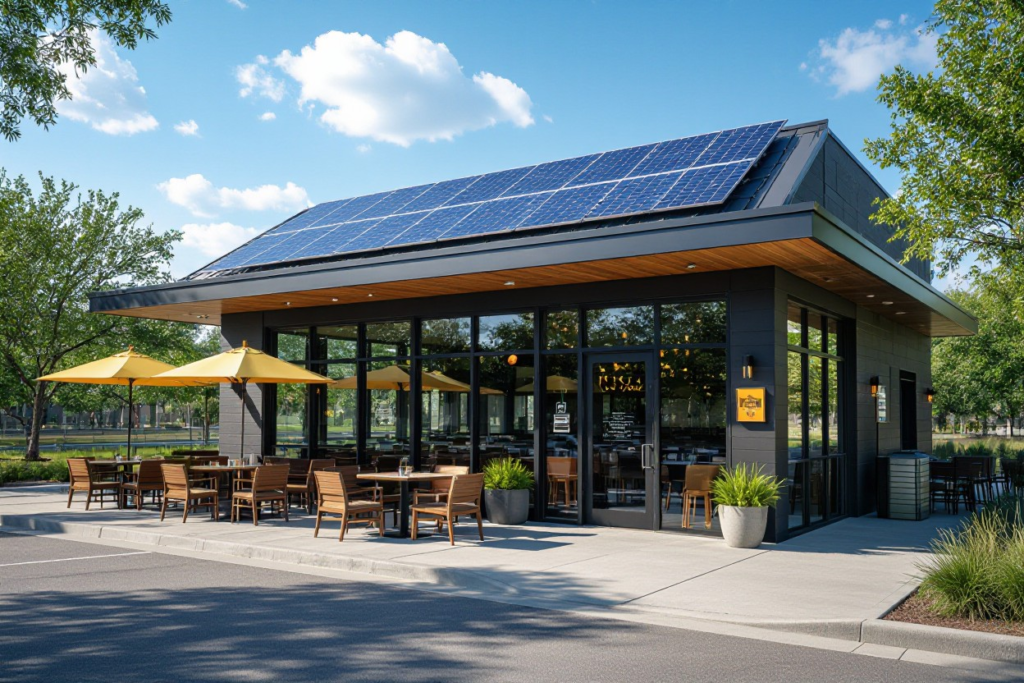
Businesses such as restaurants and retail stores on Hawaiʻi Island face high electricity costs due to extensive energy usage for lighting, refrigeration, air conditioning, and equipment. Solar energy provides an effective way for these businesses to lower operational expenses while supporting sustainability goals. By adopting the right solar solutions, businesses can significantly reduce utility bills, improve energy efficiency, and enhance their brand image as environmentally responsible establishments.
Below are five practical solar solutions that restaurants and retail businesses on the Big Island can implement to maximize energy savings. Contact us today!
Rooftop Solar Panel Systems
Rooftop solar panels are one of the most common and effective renewable energy solutions for restaurants and retail stores. These systems use available roof space to install photovoltaic (PV) panels that convert sunlight into electricity. Restaurants and retail locations typically operate during daytime hours when solar production is highest, making rooftop solar a perfect match for their energy needs. By generating their own electricity, businesses can significantly reduce their dependence on the utility grid and lower monthly electricity costs.
Solar Carports for Parking Areas
Solar carports allow businesses to transform parking spaces into energy-producing assets. These structures support solar panels above parking lots while providing shade and protection for customer vehicles. For restaurants and retail stores that attract steady customer traffic, shaded parking can improve customer experience while generating clean energy. Solar carports also maximize the use of existing property space without requiring additional land.
Solar Battery Storage Systems
Solar battery storage systems store excess solar energy generated during the day so it can be used later when energy demand is high or solar production decreases. For restaurants that operate into the evening or retail stores with extended hours, battery storage ensures that solar energy can continue powering operations even after sunset. Battery systems also provide backup power during grid outages, helping businesses maintain essential operations.
Solar Water Heating Systems
Restaurants often require large amounts of hot water for cooking, dishwashing, and cleaning. Solar water heating systems use solar collectors to heat water using sunlight, significantly reducing the energy required for conventional water heating. By installing solar water heating systems, restaurants can cut utility costs while maintaining a consistent supply of hot water for daily operations.
Energy Management Systems with Solar Integration
An Energy Management System (EMS) helps businesses monitor and control energy usage across their facilities. When integrated with solar power systems, EMS platforms allow restaurant and retail owners to track solar production, optimize energy consumption, and identify areas where energy can be saved. This data-driven approach improves efficiency and ensures businesses get the maximum value from their solar investment.
Solar Refrigeration Support Systems
Refrigeration is one of the largest energy consumers in restaurants and retail stores, especially for businesses that rely on cold storage for food, beverages, or perishable products. Solar energy can help offset the electricity required to operate refrigerators, freezers, and display coolers. By powering refrigeration systems with solar energy during peak daylight hours, businesses can significantly reduce energy costs while maintaining reliable cooling performance.
Solar-Powered Outdoor Lighting
Outdoor lighting is essential for restaurants and retail stores to maintain safety, visibility, and customer comfort during evening hours. Solar-powered lighting systems can illuminate parking lots, signage, patios, and walkways without increasing electricity bills. These systems store energy during the day and automatically power lights at night, providing a cost-effective and environmentally friendly lighting solution for commercial properties.
Solar EV Charging Stations
As electric vehicles become more common, businesses can attract environmentally conscious customers by offering solar-powered EV charging stations. Restaurants and retail stores can install charging points powered by solar energy, allowing customers to charge their vehicles while they shop or dine. This solution not only supports clean transportation but also enhances a company’s reputation as a forward-thinking and sustainable business.
Conclusion
Solar energy offers powerful opportunities for restaurants and retail businesses on the Big Island to reduce operating costs and improve sustainability. With solutions such as rooftop solar panels, solar carports, battery storage systems, solar water heating, and energy management systems, businesses can significantly lower their electricity expenses while making better use of abundant sunlight.
By investing in solar technology, restaurants and retail stores not only gain long-term financial benefits but also demonstrate a commitment to clean energy and environmental responsibility. As energy costs continue to rise, adopting solar solutions can help businesses build a more resilient, efficient, and sustainable future on the Big Island.


Recent Comments