
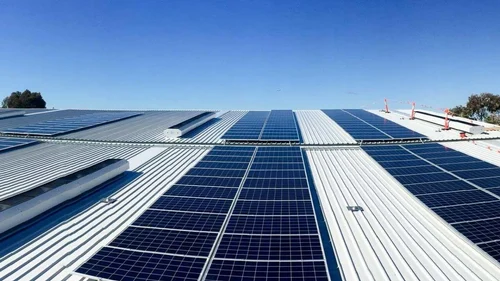
Government agencies, municipal facilities, and public buildings on the Big Island of Hawaiʻi face unique challenges when it comes to energy costs, sustainability goals, and long‑term infrastructure planning. With some of the highest electricity rates in the United States and strong state commitments to renewable energy, solar power presents a cost‑effective and environmentally responsible solution.
By adopting solar energy, government entities can reduce operating expenses, support Hawaii’s clean energy goals, increase energy independence, and demonstrate leadership in sustainability for businesses and residents across the island.
This article explores how solar solutions can benefit government and municipal buildings on the Big Island, the types of solar systems available, financial incentives, implementation strategies, and measurable long‑term impact. Contact us today!
Benefits of Solar Energy for Government & Municipal Buildings
Solar energy delivers multiple direct benefits for public agencies, ranging from cost savings to environmental stewardship and community leadership.
Reducing Utility Costs for Public Facilities
Government and municipal buildings such as city halls, libraries, fire stations, recreation centers, and public works facilities typically operate long hours and consume considerable electricity. Solar installations can significantly offset grid dependence and reduce utility expenses.
Over time, these savings can free up critical public funds for services such as education, infrastructure maintenance, and community programs.
Advancing Hawaii’s Clean Energy Goals
The State of Hawaiʻi has ambitious renewable energy targets, including 100% renewable electricity by 2045. Public sector adoption of solar energy helps lead by example, reducing greenhouse gas emissions and supporting statewide sustainability initiatives.
Solar power on government buildings helps reduce carbon footprints and builds resilience against climate challenges like rising temperatures and extreme weather.
Promoting Energy Independence and Resilience
Solar power, when combined with battery storage, enhances energy resilience during grid outages. Municipal facilities—especially emergency response centers and critical infrastructure—benefit from backup power that ensures continuity during natural disasters, storms, or grid disruptions.
This energy independence strengthens public service capabilities and enhances community preparedness.
Solar Solutions for Government & Municipal Buildings
Government and municipal facilities vary widely in structure, energy needs, and available space. Multiple types of solar solutions are suitable for different building types and public functions.
Rooftop Solar Panel Systems
Rooftop solar is one of the most common solar solutions for government buildings with substantial roof space. Examples include:
- City halls
- Community centers
- Libraries
- Administrative buildings
Installing photovoltaic (PV) panels directly on rooftops allows these facilities to generate electricity on‑site, lower their energy bills, and maximize existing infrastructure.
Rooftop solar systems are efficient, scalable, and require minimal additional land.
Ground‑Mounted Solar Arrays
For municipal buildings with adjacent land—such as parks, maintenance yards, or underutilized lots—ground‑mounted solar arrays are a viable option. These systems can be sized to meet higher energy demands and can be designed to accommodate future expansion.
Ground‑mounted systems allow for:
- Optimal panel orientation for maximum energy capture
- Larger system sizes than rooftop installs
- Easy access for maintenance and performance monitoring
Solar Carports & Canopies
Solar carports offer dual functionality by providing shaded parking while generating solar electricity. Government agencies with public parking areas—such as municipal campuses, courts, and parks—can benefit from solar carports.
Benefits include:
- Protected parking spaces
- On‑site solar energy production
- Potential integration with EV charging stations
- Enhanced ADA access with shaded walkways
Solar carports make effective use of otherwise underutilized surface parking lots.
Solar‑Integrated EV Charging Stations
As electric vehicles (EVs) become more widespread, government buildings can support clean transportation by installing solar‑powered EV charging stations. These stations allow city fleets, employees, and residents to charge electric vehicles with renewable energy, reducing fossil fuel usage and promoting sustainable transit options on the Big Island.
Community Solar & Shared Solar Projects
For government facilities with limited space, community solar projects provide an alternative. Through shared solar arrangements, public buildings can access solar energy produced off‑site while still receiving energy credits or cost savings. This model supports equity, accessibility, and broader community participation in renewable energy programs.
Funding, Incentives & Financial Mechanisms
Solar projects for government and municipal buildings on the Big Island benefit from multiple financial incentives that reduce upfront costs, improve return on investment, and accelerate project deployment.
Federal Investment Tax Credit (ITC)
While state and private entities regularly benefit from the ITC, government agencies may partner with third‑party financiers to leverage tax credits through power purchase agreements (PPAs) or lease arrangements. The ITC can cover up to 30% of solar installation costs when structured appropriately.
State Rebates, Grants & Performance Incentives
Hawaiʻi offers various solar incentive programs, including rebates and performance‑based incentives. These programs support renewable adoption for public facilities, helping reduce capital expenditures.
Funding sources may include:
- State energy office grants
- Solar rebate programs
- Renewable energy performance incentives
- Municipal bond financing for energy projects
Net Energy Metering (NEM)
Net metering allows public facilities to send excess solar electricity back to the grid and receive credits on utility bills. These credits can offset energy consumed when solar production is low, maximizing savings over time.
Net metering is particularly valuable for government buildings with predictable daytime energy production and consumption patterns.
Implementation Strategy: How Government Can Deploy Solar
A thoughtful, phased approach ensures successful solar deployment for public facilities.
1. Site Assessment & Energy Audit
Begin with a detailed site assessment to analyze available roof space, shading conditions, and energy usage patterns. An energy audit determines current electricity consumption and identifies priority systems and facilities for solar integration.
2. Solar System Design & Optimization
Design solar systems based on energy needs, available space, and future growth plans. Consider:
- System size and orientation
- Roof structural capacity
- Battery storage integration
- Energy management systems (EMS)
An optimized solar design maximizes production and reduces long‑term costs.
3. Procurement & Financing
Government entities can explore several procurement pathways, including:
- Direct purchase
- Power purchase agreements (PPAs)
- Lease financing
- Municipal bonds for energy projects
Third‑party ownership models allow agencies to benefit from solar without initial capital costs.
4. Construction & Commissioning
Work with experienced solar providers to ensure proper installation, permitting, and inspections. Commissioning ensures the system operates as designed and delivers expected performance.
5. Operation, Monitoring & Maintenance
Ongoing operations include performance tracking, periodic cleaning, and system performance optimization through energy management systems. Regular monitoring ensures maximum energy yield and early detection of issues.
Challenges & Solutions
While solar adoption delivers clear benefits, government and municipal projects may face challenges:
Upfront Cost Concerns
Solution: Leverage third‑party financing, grants, and bond measures to spread costs over time.
Infrastructure Limitations
Solution: Conduct structural assessments early to identify suitable sites and necessary upgrades.
Policy and Permitting
Solution: Engage local permitting authorities early and coordinate with energy agencies to streamline approvals.
Community Impact & Educational Opportunities
Solar projects on government buildings can also serve as educational and community engagement tools.
Public Transparency & Energy Dashboards
Display solar performance in public lobbies or online dashboards to showcase energy production and savings.
Workforce Development
Partner with local community colleges or vocational programs to include solar installation, monitoring, and maintenance in training curricula.
Civic Leadership
Government buildings with visible solar installations inspire other organizations and residents to adopt renewable technologies, contributing to statewide clean energy goals.
Conclusion
Solar energy offers government agencies and municipal buildings on the Big Island a strategic pathway to reduce operating costs, achieve sustainability goals, increase energy independence, and lead by example.
By adopting rooftop solar, ground‑mounted arrays, solar carports, EV charging stations, and community solar initiatives, public facilities can maximize renewable energy production while supporting resilience and community benefit.
Combining financial incentives, optimized system design, and strong implementation strategies enables governments to deliver long‑term energy savings while modeling clean energy leadership for Hawaiʻi residents, businesses, and future generations.
Frequently Asked Questions (FAQs)
How much can government buildings save with solar?
Savings depend on system size, energy consumption, and net metering benefits, but many facilities experience 20–50% reduction in annual electricity costs.
What types of solar systems work best for municipal facilities?
Rooftop solar, ground‑mounted arrays, solar carports, and solar‑integrated EV charging stations are commonly deployed based on site availability and energy needs.
Are there incentives specifically for public sector solar in Hawaii?
Yes — government projects can access federal tax incentives through financing partnerships, state rebates, performance programs, and net metering arrangements.
Can solar provide power during grid outages?
Yes, when paired with battery storage systems, solar can provide backup power for critical facilities during outages.
How long do solar installations last?
Solar panels typically have warranties of 25+ years, with low maintenance needs and long operational lifespans.


Recent Comments