
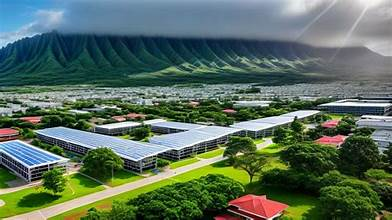
Educational institutions in Hawaii—from public schools to universities—face some of the highest electricity costs in the U.S. due to extensive use of lighting, air conditioning, computer labs, cafeterias, and campus facilities. As energy costs continue to rise, schools are looking for sustainable, cost-effective solutions. Solar energy has emerged as a practical way to reduce utility bills, enhance campus sustainability, and provide hands-on learning opportunities for students.
Hawaii is uniquely suited for solar energy adoption. With abundant sunshine year-round and state incentives supporting renewable energy, schools and universities can harness solar power to generate clean electricity, improve energy efficiency, and foster environmental stewardship.
This article explores how educational institutions can benefit from solar energy, the types of solar solutions available, funding options, challenges, and long-term benefits. Contact us today!
Benefits of Solar Energy for Schools and Universities
Solar energy provides multiple advantages beyond cost savings. For educational institutions, these benefits can directly impact budgets, sustainability goals, and student learning experiences.
Lower Energy Costs
Electricity costs can account for 10–20% of a school’s operational budget, depending on the size of the campus and energy usage. Solar panels allow schools to generate their own electricity, reducing dependency on the grid. For instance, a medium-sized school in Hawaii can save $20,000–$50,000 per year depending on system size and energy consumption patterns.
By investing in solar, institutions can redirect savings toward:
- Classroom technology upgrades
- Facility maintenance
- STEM programs or extracurricular activities
Environmental Sustainability
Solar energy adoption demonstrates a school’s commitment to environmental responsibility. By switching to solar, campuses reduce their carbon footprint, lowering greenhouse gas emissions. This aligns with Hawaii’s clean energy goals, including the state’s target of 100% renewable electricity by 2045.
Solar adoption also serves as a public statement of sustainability for students, faculty, and the surrounding community.
Educational Opportunities
Solar installations provide hands-on learning experiences for students. STEM curricula can incorporate:
- Real-time monitoring of solar panel performance
- Energy consumption and efficiency analytics
- Renewable energy research projects
- Environmental science case studies
Students can gain practical experience with energy management systems, PV technology, and data analysis, preparing them for careers in the growing renewable energy sector.
Energy Resilience and Reliability
Solar energy, especially when combined with battery storage, can improve campus energy reliability. During power outages, stored solar energy can power critical areas such as:
- Computer labs
- Laboratories
- Administrative offices
- Dormitories
This ensures continuity of operations, particularly during emergencies or natural events like storms and hurricanes.
Solar Solutions for Educational Institutions
Different campuses have varying energy needs and available space. A combination of solar technologies can help schools achieve optimal energy savings.
1. Rooftop Solar Panel Systems
Rooftop solar panels are ideal for campuses with large building roofs, such as gyms, classrooms, and administrative offices. Advantages include:
- Efficient use of existing roof space
- Minimal land disruption
- Alignment with daytime energy demand when students and staff are present
For example, a university cafeteria with high daytime electricity usage can offset costs for lighting, refrigeration, and cooking appliances. Solar panels installed on gym rooftops can provide additional electricity for HVAC and sporting facilities.
2. Ground-Mounted Solar Arrays
Schools with open land can install ground-mounted solar systems, which offer flexibility in size and orientation. Benefits include:
- Scalable energy production
- Potential for large-scale solar generation
- Opportunities for student learning and demonstration projects
Ground-mounted arrays can be combined with green spaces or agricultural programs, allowing schools to create solar + sustainability demonstration zones for educational purposes.
3. Solar Carports and Canopies
Many campuses have large parking lots that are perfect for solar carports. These structures provide:
- Shaded parking for students, staff, and visitors
- On-site renewable energy generation
- Integration with electric vehicle (EV) charging stations
Solar carports allow schools to maximize otherwise underutilized parking space while generating electricity that can power campus buildings or dormitories. For example, a high school could provide EV charging stations powered entirely by solar energy, promoting clean transportation.
4. Solar Water Heating Systems
Solar water heaters are particularly useful for:
- Cafeterias
- Dormitories
- Athletic facilities
- Science labs requiring hot water
These systems reduce the electricity demand of traditional water heaters, lowering costs and conserving energy. In addition, students studying environmental science or engineering can track solar water system performance as part of hands-on learning projects.
5. Energy Management Systems (EMS)
Integrating an EMS allows campuses to monitor and optimize energy usage. EMS provides:
- Real-time energy production and consumption data
- Peak demand management to reduce utility charges
- Alerts for underperforming solar panels or system issues
- Integration with battery storage for energy optimization
With an EMS, campuses can ensure maximum efficiency and ROI from their solar investments while providing educational insights for students studying energy systems.
Funding and Incentives for Educational Institutions in Hawaii
Hawaiʻi provides a variety of incentives to reduce the cost of solar installations for schools and universities.
Federal Investment Tax Credit (ITC)
The ITC provides up to 30% tax credit for solar installation costs, reducing the upfront investment significantly.
State Grants and Rebates
Hawaiʻi State Energy Office offers funding and rebate programs for educational institutions adopting renewable energy.
Net Metering Programs
Schools can export excess electricity to the grid and receive credits on their utility bills, further reducing operating costs.
Performance-Based Incentives
Some programs compensate institutions based on solar system performance, encouraging energy efficiency and optimal system management. By leveraging these programs, schools can accelerate the payback period and maximize long-term savings.
Challenges and Considerations
While solar energy offers multiple benefits, campuses should consider:
Initial Investment Costs
Solar installation requires capital. However, grants, tax credits, and long-term energy savings make solar a sound financial decision over time.
Structural and Site Assessments
Roof strength, shading, and local building codes must be evaluated to ensure panels are safe and efficient.
Energy Demand Analysis
Proper sizing of solar systems ensures they meet energy needs without oversizing, which can be costly and inefficient.
Maintenance and Monitoring
Regular cleaning, inspection, and performance monitoring are essential to maintain efficiency and longevity of solar systems. Partnering with experienced solar providers can help schools navigate these challenges effectively.
Conclusion
Solar energy is a transformative solution for educational institutions in Hawaii. By adopting rooftop solar panels, ground-mounted arrays, solar carports, solar water heating, and energy management systems, schools and universities can:
- Reduce electricity costs
- Improve sustainability
- Provide hands-on learning opportunities
- Enhance energy resilience
Solar-powered campuses not only save money but also lead by example, inspiring students and communities to embrace renewable energy. With proper planning, funding, and management, educational institutions can create smart, sustainable, and energy-efficient campuses that benefit both current and future generations.
Frequently Asked Questions (FAQs)
Why should schools invest in solar energy?
Solar helps reduce energy costs, supports sustainability, and provides students with practical learning experiences about renewable energy.
Can solar power cover all energy needs for a university campus?
Depending on installation size and energy consumption, solar can meet a substantial portion of demand. Grid power may still supplement usage during peak periods.
What types of solar systems are best for educational institutions?
Rooftop solar, ground-mounted arrays, solar carports, solar water heating systems, and EMS integration are commonly used.
Are there incentives available for schools installing solar in Hawaii?
Yes, including federal tax credits, state rebates, net metering, and performance-based incentives.


Recent Comments